
Being a good mother isn’t always about the kids. A “stressed-out” mother will find it very hard to be a good mother. No matter how much you love your kids, when you are stressed, it is difficult to be the best mother you can be. So, what can you do?
TIP ONE: Start your morning off with inspiration. Keep an inspirational book at your bedside, and before you get out of bed in the morning take a few minutes to read from it. Any amount of time is fine, if you only have two minutes, then just take two minutes, if you have longer, take longer.
One of my favorites is, “The Woman’s Book of Courage” - by Sue Patton Thoele
Any book that gives you inspiration and hope is fine, I actually like to keep a few different ones at my bedside, so I can switch it up.
Some other authors that are good for this purpose are; Marianne Williamson, Wayne Dyer, Deepak Chopra, Louise L. Hay, Gary Zukav, Shakiti Gawain, or any book of meditations, thoughts, or affirmations.
TIP TWO: Practice patience throughout your day. You will never be perfect at this, but try to catch yourself when you are being impatient. You might be in line at the grocery store or stuck in traffic, but when you feel you are losing your patience, try and get it back. Remind yourself, that these moments can be a time for reflection, in slowing down and being “in the moment”. Rather than getting sucked into the negative aspects of being impatient, choose to be patient. Just try it, even if it just works half the time, that’s half the time that you’re not letting yourself get all stressed out.
TIP THREE: At the end of your day, take a few minutes again, to read from your books of inspiration and hope. Also, start a journal on the things and people in your life that you are grateful for. These two things will help you end your day on a positive note.
TIP FOUR:Keep a good sense of humor. When your day is going all wrong, there are two ways that you can handle it. You can either stress and be miserable or laugh it off and make the best of it. The latter will keep you and your child in good spirits.
TIP FIVE:Go with the flow. There are some things that cannot be planned or controlled. When a baby cries or has a dirty diaper or decides to wake up early from a nap are a few of these things. If you are used to having complete control of your life, you may want to reconsider your strategy. When it comes to having children, you must be flexible and willing to adjust and adapt.
TIP FOUR:Find your inner strength. You were once used to receiving eight hours of sleep at night and now you are functioning on three to five hours each night. You will complete tasks that you once thought as being impossible.
TIP SIX:Be prepared. Always be ready when things do not go as planned. Keep a back-up pacifier, extra change of clothes, and plenty of occupiers. When your baby gets sick in the car or traffic is jammed, move to plan two instead of getting yourself worked-up.
TIP SEVEN:Be clever. When it comes to keeping children asleep, busy, or quite, moms rate number one. Moms are the best at finding the least disruptive paths when moving a sleeping child from one location to another.
TIP EIGHT:Take advantage of down times. You will spend much of your day caring for, cleaning up after, and occupying your children. However, most days will have bouts of down time. Be able to let go and relax during these times. They may be the only things that will keep you going for the next hours to come.
TIP NINEDevelop your independence. If you are staying at home alone with your baby, chances are that you will be required to take care of some situation on your own. Make sure that you have your own set of tools (screwdriver, hammer, etc). In the early years, toys and baby equipment will need assembling. Later, science and art projects will need your attention.
TIP TEN:Get in touch with your physic powers. You never knew that you had it but chances are that you do. When you sense that something is not right, go with your gut. You are usually right. Never go against your best judgment when it comes to your children.
As a mother of teenagers, do you know how many times I picked up the phone to apologize to my own mother?
- Christy Borgeld
Feelings of worth can flourish only in an atmosphere where individual differences are appreciated, mistakes are tolerated, communication is open, and rules are flexible - the kind of atmosphere that is found in a nurturing family.
- Virginia Satir
We should never permit ourselves to do anything that we are not willing to see our children do.
- Brigham Young
Your family and your love must be cultivated like a garden. Time, effort, and imagination must be summoned constantly to keep any relationship flourishing and growing.
- Kim Rohn
Motherhood qualified me to let the child within come out and play.
- Christy Borgeld
The bond that links your true family is not one of blood, but of respect and joy in each other's life.
- Richard Bach
It is better to bind your children to you by a feeling of respect and by gentleness, than by fear.
- Terence
Level with your child by being honest. Nobody spots a phony quicker than a child.
- Mary MacCracken
If you want children to keep their feet on the ground, put some responsibility on their shoulders.
- Abigail Van Buren
Your children will become what you are; so be what you want them to be.
- David Bly
Children need love, especially when they do not deserve it.
- Harold Hulbert
Fathers are like a lighthouse… when there is fog his children can always depend on seeing the light.
- Christy Borgeld
To understand your parents' love you must raise children yourself.
- Chinese Proverb
Instill great values in your children today and your grandchildren will prosper tomorrow.
- Christy Borgeld
Children are the reward of life.
- Congolese Proverb
My fathers planted for me, and I planted for my children.
- Hebrew Proverb
The foundation my parents laid down with our faith continues to be my core.
- Christy Borgeld
A child becomes an adult when he realizes that he has a right not only to be right but also to be wrong.
- Thomas Szasz
It takes a whole village to raise a child.
- African Proverb
Adults are dead children
- Michael Brown
Children require guidance and sympathy far more than instruction - Anne Sullivan
Human beings are the only creatures that allow their children to come back home.
- Bill Cosby
Blessed indeed is the man who hears many gentle voices call him ‘father.’
- Lydia Maria Child
Tuesday, November 13, 2007
How To Be The Best Mom In The World

How To Be A Powerful World Leader
There are many books on leadership. They can have lots of great examples and in-depth explanations, but sometimes you just need something simple to help you focus on the essentials. This article intends to do just that. These are the habits that will help you and your team achieve great things if you focus on them.
1. Goals. Make it simple and easy for your team to understand the mission and to understand their part in achieving it.
Concise Goals. Keep them simple and easy to understand.
Focus your team on as few goals as possible.
Communicate the team's goals Often and through Various Means (team meetings, individual meetings, emails, posters, slogans). And then do it some more.
Track progress on goals.
Involve team players in tracking the goals so that they own the results.
2. Motivating People. What you reward gets done. It's that simple.
Incent team players to do the tasks that are most critical for reaching the team's goals. Make sure the rewards are meaningful to people. Understand each player and what they want from their job and in life. That's how you'll know how to reward them.
Praise, Thank, and Recognize big and small contributions by individuals. Do this often and then do it some more.
Set High Expectations. People will live UP to or DOWN to the expectations you set. Set them high and you're saying, "I believe in your ability to do great things!"
Empower people by delegating responsibility.
Celebrate team accomplishments often.
Encourage Fun. Make the work place a fun place to be. Yes, work needs to get done but short fun breaks can make all the difference in the culture of your team.
Pride. Foster a sense of pride in your team. As a team you could establish a mascot, create a team chant, and have a meeting that is focused solely on each individual's strengths and the team's overall strengths.
3. Walk Your Talk. You need to practice what you preach. This is how you establish trust and credibility.
Model the Way by participating in the team's tasks as much as your position allows.
Be Honest. Deliver on your promises. Actions speak louder than words.
Challenge Yourself. Do your best (and then some) just like you ask your team to do their best.
Speak Up. Just like your team members sometimes need to let you know what they've done in order for you to be able to recognize and praise them. They, in turn, need to know what you've been working on and what you've accomplished. So find ways to communicate this, modeling this key behavior.
Stay Sharp. You need to be competent for others to follow you. If you're not improving, you're falling behind. Always be learning and keep on top of the latest skills, technology, and knowledge in your field.
4. Inspire through a combination of
Unwavering Positive Future Vision
Commitment to Improve things along the way that will make that positive vision a reality.
Ability to Bootstrap as necessary when resources are tight.
5. Process Power. Good process is like having a high performance machine. Sloppy process makes things fall apart. So be sure to establish these key habits with your team.
Establish Routines. Do this for the team and also work with each individual to come up with their own high productivity routines. These are routines that dictate what work is done when.
Establish Processes for all the tasks that are done repeatedly. It takes time to set up at first, but after that it will pay off in saved time and less errors. Processes describe how work is done and might involve systems for doing the work.
Task Assignment. As much as possible, assign tasks according to the strengths of each teammate.
6. Change. Embrace change by seeking it out. This will tread a path for your teammates to follow.
Change Routines Quarterly. Look for better ways to achieve the team's goals.
Take Risks. Don't be afraid of failure. No one ever reaches great heights without a few failures.
Learn. Learn as a team from failures. "How can we improve it the next time?"
Encourage team members to take smart risks too by making it safe to fail. Focus on learning from past experiences and building upon them to find better solutions.
7. Advocacy. Support your team and they'll support you.
Promote your team members. Make sure others outside your team know about the individual team members' successes. You want your team members to excel and even graduate away from your team possibly. Don't worry. If your team is great there will be plenty of others who will want to join! This natural turnover of team members is like the renewal of cells in your body. It is necessary and healthy.
Promote your team. It's your job to market the great accomplishments of your team in order to get the rewards, recognition, and resources that your team deserves.
Fight for the most important resources and changes that will benefit your team and the organization overall. Remember to pick your battles wisely.
What else do you think is essential for a good leader? Got a good story? Please Share in the comments. We'd love to hear from you!
How To Stop Cooking Uncooked Food
Are you sure you are using the correct cooking method to cook your foods? Do you even know the difference? Find out below.
Braising
It is a cooking method usually used for meat and tough vegetables. First the ingredients are browned, and then slowly cooked in a tightly covered pot with some cooking liquid over low heat for a long period of time. The cooking liquid can be water, wine or stock.
Tips
The ingredients should be cut uniformly; same size.
If you don't like bones, no need to struggle to remove them while chopping them. Just cook it with the bone. It will be easier to separate the flesh and the bone after cooking.
Always turn off the heat before all the cooking fluid is over. The remaining fluid will be absorbed by the ingredients making them juicier and meltingly tender.
Braising vegetables and fruits takes less time. It takes less than 30 minutes for vegetables and fruits to cook. So add them midway while cooking your meat.
If you like some sauce to your curry, then uncover the cooking ware for the last 30-15 minutes. The excess fluid will evaporate leaving quite a thick sauce.
Suitable for: Meat, chicken, fish, vegetables (cauliflower, cabbage, beet, sweet potatoes, potatoes, carrots, etc) and fruits (pineapples, pears, apples).
Grilling and broiling
Both techniques use intense direct heat to cook foods. The cook needs to be very cautious to avoid burning. They provide a similar charring and caramelization that give food that distinct flavor.
Tips
Try remove the maximum of grease from the meat you are going to cook. Fats that drip on the hot heating element or charcoal produce cancer causing emissions.
.
It is very difficult to remove all the fats from your meat. In this case just wrap your meat in aluminum foil before grilling.
If you don't appreciate red meat, cut the meat in thin slices. They will be thoroughly and homogenously cooked faster.
A good marinade will give a good flavor to your food. Use lemon juice, herbs and spices and allow your meat to marinate for at least 2 hours.
If you are grilling chicken, it is best to remove its skin.
Never let your food unattended when grilling or broiling. The food cooks so fast that it can be spoilt by burning for the slightest delay on your behalf.
Always do grilling in open spaces or in well ventilated areas.
The food often catches fire. Do not throw water directly. The grease may splash and burn you as well as your surrounding. I usually use a mixture of beer and soda to extinguish the fire. Or you can simply turn off the heater if you are using electrical grills or broilers.
Always keep a fire extinguisher nearby in case things get out of control.
Suitable for: Sliced ham, bacon, fish, calf's liver and all tender meat in general.
Poaching
Poaching is the process of gently simmering food in liquid, generally water, stock or wine. In poaching the cooking liquid maintains a constant temperature. It is a fast method of cooking tender food and the food is moved as little as possible minimizing the effect of break up or fall apart.
Tips
Avoid a too high temperature to prevent agitation of the liquid. The liquid should not form bubbles inside.
Make sure to have enough liquid in the pan for both deep and shallow poaching.
Poaching keeps flavors of food well and does not add fats/oils.
Suitable for : Eggs in water, fish in white wine, poultry in stock, fruit in red wine, duck in fat.
Baking
Baking is more known to be used for dessert and bread. It is similar to roasting except that the temperature is much lower.
Tips
It does not require fat. A small amount can be added for taste.
To prevent the food from drying, baste it from time to time.
Suitable for: Seafood, poultry, lean meat, and vegetables and fruits
Roasting
Roasting is a cooking method that utilizes dry heat, whether an open flame, oven, or other heat sources. Roasting usually causes caramelization of the surface of the food, which is considered a flavor enhancement.
Tips
Marinate the meat or chicken to be roasted. Use spices and herbs as well as lemon juice.
So that the marinate penetrates the meat better, prick it or make cut across it. Allow to stand for a minimum of 2 hours.
Do not add any fat. The fat from the meat is more than enough.
Place the food on a tray to collect the excess fat during the cooking process.
Turn the meat twice or thrice for a homogenous cooking.
Suitable for: Meats and most root and bulb vegetables.
Sautéing
Sautéing is one of the easiest and quickest methods of cooking. It is a technique of browning foods quickly over high heat in a small amount of hot fat.
Tips
The fat is very hot so that the food browns well and doesn't absorb the fat.
The pan is low sided and large enough to hold the food without crowding so that the food browns quickly rather than stewing in its own juices.
The food to be cooked is completely dry to prevent it from stewing (this parts is particularly important when sautéing foods that have been marinated).
It is recommended to use a thick pan. a thin pan will not dissipate a uniform heat thus burning the food in the middle of the pan.
Use a high temperature in the beginning and while coming to the end, gradually lower it. This will help to produce consistent sauce in case you are preparing one.
Use butter rather than oil. It will give your food the best taste and a wonderful golden crust. But precautions must be taken as butter burns more easily.
Suitable for: Meat, potatoes , onions, bacons.
Stir-frying
Do you like Asian foods? Stir-frying is an Asian technique for cooking meat and vegetables quickly, so that they retain texture and flavor. Stir-frying typically involves a quick sauté over high heat, occasionally followed by a brief steam in a flavored sauce.
Tips
A marinade for the meat or seafood before the stir-frying helps to enhance the flavor and seal in the moisture. Cornstarch is often called for, along with a small amount of liquid like soy sauce or rice wine
To enjoy the health benefits of stir frying, you need to quickly remove the food from the heater. The food especially the vegetables will preserve most of their nutritive contents.
Cut your food in small pieces. This will allow you to use a larger variety of ingredients and yet in smaller portions. Different types of food imply a range of health benefiting nutrients.
You can use the same dish to do all your food since it is a very quick method
Since we use a variety of ingredients, we can prepare a balanced diet very quickly by including cuts of meat or seafood paired with large quantities of inexpensive rice, pasta and vegetables.
Suitable for: Fried rice, riz Cantonai, meat, sea foods and almost every vegetables.
Steaming
At last, my favorite technique. Steaming consists of cooking food by placing it in a perforated basket placed over a recipient of boiling water.
Tips
Cover the perforated basket to allow a uniform and high temperature around the food being cooked.
This technique requires a very low temperature to work properly. It preserves the nutritive value and integrity of the food.
There are less risks of burns compared to techniques where higher temperatures are used.
It requires no fat at all and uses only water.
Suitable for: Rice, leafy vegetables and to heat precooked foods.
Cooking technique is as important as choosing the components of a balanced diet. Choosing the correct food but not cooking it correctly can do as much or even more harm than selecting the wrong food.
Grilling Tips
Try remove the maximum amount of grease possible from the meat you are going to cook. Fats that drip on the hot heating element or charcoal produce cancer causing emissions.
It is very difficult to remove all the fats from your meat. In this case just wrap your meat in aluminum foil before grilling.
If you don't appreciate red meat, cut the meat in thin slices. They will be thoroughly and homogeneously cooked faster.
A good marinade will give a good flavor to your food. Use lemon juice, herbs and spices and allow your meat to marinate for at least 2 hours.
If you are grilling chicken, it is best to remove its skin.
Never leave your food unattended when grilling or broiling. The food cooks so fast that it can be ruined quickly by burning it.
Always do grilling in open spaces or in well ventilated areas.
Always keep a fire extinguisher nearby in case things get out of control.
How To Repair Nokia Keypad Buttons That Stopped Working
here is a little tip for nokia technicians, when you have a nokia mobile phone with stiff or buttons that do not work, open the phone to see the keypad button sheet layer and with a tweezer peel back the sheet (usually white on nokias) and you will see a silver circle round conducter you will need to clean it with cloth or just grab a broken mobile phone keypad and just peel off the silver circle conducter and replace this with other keypad silver circle conducter. now you will have a working keypad on your nokia unfortunately i do not have pictures of the proccess
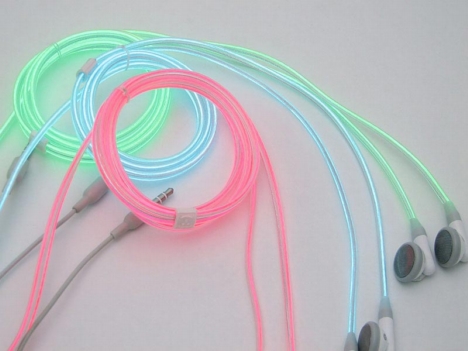
Earphone lines that flash with your music
This is a cool concept. Not shown is the battery box that the system needs though.
http://www.gearfuse.com/earphone-cables-flash-with-your-music/
How to Make a Duct Tape Cell Phone Case
"Instead of buying a fancy, expensive cell phone case at the store, you can make your own from one of the world's most versatile materials--duct tape! With just one roll, you can create a custom-fit case that'll protect your phone from scratches."
http://www.wikihow.com/Make-a-Duct-Tape-Cell-Phone-Case

World's Largest Helicopter -- 231,485 lb. Maximum Takeoff Weight


The Soviet Union developed the Mil V-12 during the 1960s. This gigantic aircraft had a maximum takeoff weight of 231,485-pounds and featured dual rotors, mounted at the end of each wing. It was deemed a failure due to its large size and poor maneuverability -- two prototypes were built.
Money Saving Tips For Single Mothers
Do you have a system for bills and account statements? This could help you to track your finances, pay bills on time, stay within budget, and alert you to questionable charges.
Do you take notes when you're on the phone with a customer service rep? This could help you to resolve discrepancies and achieve faster results on similar issues in the future.
Do you have a junk drawer or closet? Cleaning it out can help you to avoid buying what you already have.
Do you keep up with product warranties/receipts? Keeping them in a safe place will ensure mfg/store replacement, instead of buying a new one.
Disorder is the culprit of my waste. The examples above are just a few mistakes I've made this year alone. If I added them all up, I could have probably saved $1,000 or more.
Think long term and think real savings...get organized!
Another Cheap Homemade AC
Materials used:
• Aluminum repair roll ($10-15)
• Nuts, bolts, and washers ($5-10)
• Waterproof silicone ($5-10)
Total cost: $20-35
The heat exchanger is made from straight sections of aluminum (cut from the repair roll) bent into a U-shape, and bolted together, as shown (Figure 1, 2, 3). Silicone was used to seal the gaps along the edges and around the bolts.

Figure 1

Figure 2

Figure 3
Air enters one end of the heat exchanger, cools down as it passes through the U-shaped channel, and exits the other end.
The cooling medium is ice-water (Figure 4).

Figure 4
The heat exchanger is placed inside the container (Figure 5).

Figure 5
The water level inside the container is deliberately kept low (less than half full) because a smaller amount of water gets colder for a given amount of ice. The trade-off with this is that there is less heat exchanger area in contact with the water, meaning the air doesn't cool as much as it passes through.
The balance is in using a volume of water such that you keep the water temperature as low as you can (for a fixed amount of ice), while providing sufficient heat exchanger area (in contact with the water) to obtain decent cooling of the air.
A fan is connected to the intake side of the heat exchanger via a plastic bag taped at the two interfaces. It's crude but nevertheless, it's an easy way to accommodate the transition and ensures that air enters the exchanger without leaking. See Figure 6.

Figure 6
The ice-water temperature was approximately 4.5 degrees Celsius.
The temperature drop of the exiting air was approximately 8 degrees Celsius**.
The fan speed was set on low.
If you don't have any ice available you can fill the container up completely with water and the air will be cooled very close to the water temperature. Tap water in the summer, in my area, is about 20 degrees Celsius. This will provide sufficient cooling on really hot days. Also, a larger volume of water will cool for a longer period of time. The container I used holds about 20 liters of water, enough cooling for a few hours.
Technical Notes:
• The cross-section of the heat exchanger is 1 cm x 25 cm. This yields a high wetted perimeter relative to cross-sectional area, inducing turbulence and improving heat transfer in a predictable way. To calculate this I used equations for internal flow from my heat transfer book.
• Lower fan speed results in greater cooling since the air stays in contact longer with the heat exchanger.
• The cross-sectional area of the heat exchanger is roughly 4 in2. This keeps the back-pressure reasonably low on the fan. An opening less than 1 cm wide can be used to achieve even greater cooling, but care has to be taken to keep flow (pumping) loss to a minimum. With a smaller cross-sectional area the fan can't push the air through as fast, meaning you have to set the fan speed higher, or get a stronger fan to push the air through at the same speed.
• Flow length also contributes to pumping loss, although it's not as strong an influence as cross-sectional area. It too must be balanced with the desired exit temperature and allowable fan power.
** With the heat exchanger immersed in the ice-water, I measured the exiting air temperature as 10-11 degrees Celsius. With the heat exchanger not immersed, I measured the exiting air temperature as 18-19 degrees Celsius.
How To Make The World's Coolest And Cheapest Homemade Airconditioner
Here's the overall view of the unit. A high speed fan pushes the air through the perfectly sized radiator, and water flow rate is controlled by a small hand valve.

The radiator itself was horribly filthy when I first took it off, but a quick soak in some warm water and light detergent took care of it.

I placed the fan fairly close to the radiator itself, and it works great. I typically put the fan on the medium or low setting, as I notice little benefit from the high speed setting other than increased noise.

The radiator was almost perfect, it only needed to be raised by a centimeter or so to align with the fan.

To calibrate the valves, the small hand valve inside is first opened wide and the garden hose opened or closed to find an appropriate upper flowrate. Then the hand valve may be used to vary the water flow or turn it off entirely.

The nice thing about this new setup is that all control is now done from inside the room. Starting and stopping the unit is far more convenient, which leads to more efficient water usage.
The performance of the unit is drastically improved over the old design. Less water is needed, and the room cools quicker.

The water first runs through this coil, through the ice water, and then out to the fan

Here we can see the aquarium pump submerged in the ice water. The aim was to increase the power of the pump, and replace the polystyrene container with something more permanent. A small freezer with its heat vented to the outside would be ideal.

All Credit Goes To Pete And Geoff For Their Wonderfull Invention.

Monday, November 12, 2007
How To Be The World's Best Dad
Put their interests first, always. Do you enjoy drinking or smoking? Guess what — it’s not good for them, and you’re setting an example with everything you do. I quit smoking about 18 months ago not for my sake, but for my kids. Now, it is still important to take care of yourself (otherwise you can’t take care of them), but you should still have them in mind.
Protect them. As a dad, one of your main roles is protector. There are many ways you need to do this. Safety is one: child-proof your home, teach them good safety habits, set a good example by using your seatbelt, make sure they use a car seat if below a certain age & weight, etc. But financial protection is also important: have life insurance, car insurance, an emergency fund, a will.
Spend your spare time with them. When we get home from work, often we’re tired and just want to relax. But this is the only time we have with them during the weekdays, often, and you shouldn’t waste it. Take this time to find out about their day, lay on the couch with them. On weekends, devote as much time as possible to them. While work may be your passion, it won’t be long before they’re grown and no longer want to spend time with you. Take advantage of these years. The thing kids want most from their dads is their time.
Give them hugs. Dads shouldn’t be afraid to show affection. Kids need physical contact, and not just from their moms. Snuggle with them, hug them, love them.
Play with them. Go outside and play sports. Do a treasure hunt. Have a pillow fight. Play Transformers or Pokemon with them. Don’t just watch TV. Show them how to have fun. See 100 Ways to Have Fun with Your Kids for Free or Cheap.
Do the “mom” stuff. Things that are traditionally considered “mom” duties are not just for moms anymore — changing diapers, feeding, bathing, rocking them to sleep in the middle of the night. Dads should help out as much as they can, sharing these types of duties equally if possible. And in fact, if you’re a dad of a baby, this is the perfect time to bond with your child. You should leap at the chance to do these things, because that’s how you start a life-long close relationship with your child.
Read to them. This is one of the most important things you can do for your child. First of all, it’s so much fun. Kids books are really cool, and it’s great when you can share something this wonderful with your child. Second, you are teaching them one of the most fundamentally important skills (reading) that will pay off dividends for life. And third, you are spending time with them, you’re sitting or lying close together, and you are enjoying each other’s company. See the Best All-Time Children’s Books.
Stand by mom. Don’t contradict their mother in front of them, don’t fight with her in front of them, and most definitely don’t ever abuse her. How you treat their mother affects their self-esteem, and the way they will treat themselves and women when they grow up. Be kind and respectful and loving of their mother. And always work as a team — never contradicting statements of the other.
Teach them self-esteem. Maybe this should be No. 1. Well, these aren’t in any order, but this is one of the most important points. There is nothing you can do that is better than giving them high self-esteem. How do you do this? A million ways, but mainly by showing them (not telling them) that you value them, by spending time with them, by talking and listening to them, by praising things they do, by teaching them (not telling them) how to be competent. Praise and encourage, don’t reprimand and discourage.
Teach them about finances. This is a point often missed in articles about dadhood. You might not need to teach your 1-year-old about index funds or portfolio diversity, but from an early age, you can teach them the value of money, how to save money to reach a goal, and later, how earn money and how to manage money properly. You don’t want your child to go into the world knowing as little as you did, do you?
Be good to yourself. You shouldn’t give up your entire life when you become a dad. You need to take care of yourself, give yourself some alone time, and some time with your buddies, in order to be a great dad when you’re with your kids. Also take care of your health — eat healthy, exercise — because 1) you can’t take care of your kids if you’re sickly, 2) you are teaching your kids how to be healthy for life, and 3) you want to enjoy those grandkids someday.
Be good to the mom. This isn’t the same as No. 8 — you should be good to their mom even when they’re not looking. Take her to dinner, give her a massage, do chores around the house for her, give her some time alone and babysit while she goes out, show affection to her, give her little surprises. Because when mom’s happy, the kids are happy. And dad will be happy too!
Also check out: www.GreatDad.com
How To Remove Debt From Your Life Forever
Don’t get into debt. Use cash for all your purchases and don’t take on any debt except home and auto.
Spend less than you earn.
When debt is closed out, put 60% in savings and enjoy the remain 40%.
Take stock of all your liabilities, so you know exactly how much you owe to the world. Put them in a spreadsheet, with monthly payments, interest amounts, balances, and a running grand total of all your balances. Update it monthly as you pay off debt, and watch the overall amount go down slowly. It’s very motivational.
Have only one credit card with a low limit, and only one loan with monthly payment not exceeding 25% of income.
Build up an emergency fund first. If you come into extra money (tax returns, etc.), use it to build an emergency fund and pay off debt after that.
Cut up your credit cards.
Speak to a credit counseling service to help work out a plan: your “must pay” outgoings, arrange with creditors to freeze interest and accept a revised monthly payment.
Stop using credit cards to make it to the next paycheck. Stop getting further into debt.
Don’t overpay your debts — leave enough so you have enough for regular expenses too.
Avoid eating out. Cook your own meals, except on very special occasions.
For entertainment, visit friends and be creative on how to entertain yourselves and your family without spending a dime.
Don’t pay off your credit card balance from the emergency account. Don’t touch the emergency account at all — it doesn’t exist!
Look for expenses coming up in the future and plan for them, so you don’t have to go into debt when they come up.
Make a budget - Purpose every dollar (including some buffer).
Snowball the debt - Pay minimums on everything, attack the smallest balance with all the extra cash you can assemble, then move on to the next one.
Be on the same page as your spouse or partner. Competing interests are suicide.
Recognize your spending tendencies (and your family’s) and place limits on them.
Develop good habits instead.
Read Dave Ramsey. Read “Your Money or Your Life”.
Keep trying and don’t give up. Make a commitment, and if you aren’t getting out of debt slowly but surely, revisit that commitment. Change is difficult and it takes drastic change in mindset and behaviors to get out of debt. Anyone can do it - as long as you really want to do it.
Stop spending! You have to really, truly want to do this. Otherwise, you’ll put yourself on a financial diet and then crash and burn and find yourself justifying why you deserve to spend so much money on a new iPhone when you have a perfectly good phone and $20,000 in debt.
Praise yourself for every small accomplishment. But, don’t praise yourself by spending frivolously.
Find the tools that work for you and stick to them. If the tools aren’t working, find new tools. There are plenty of tools and ideas out there - for free.
Change yourself. If you have a spouse or partner that is contributing to the debt, it can be a big challenge to get them to change. Focus first on changing your behaviors and attitude.
Be realistic. If you started accumulating debt three or four years ago, realize that it will probably take you more then three or four years to get out of debt and stay out of debt.
Create a realistic budget. Put as much money as you can towards paying down debt and having an emergency fund, but allow for a little bit of. Only the truly dedicated can live with no social/recreational activities for the amount of time it takes to become debt-free.
Eliminate. Take a hard look at what’s truly necessary, and be willing to make compromises. Cable TV, satellite radio, and lunches in the office cafeteria are not necessities. If you have a hard time letting go of these things, run your numbers through a debt calculator twice - once with your current budget, and once with additional money currently paying for niceties. You’ll be amazed at how much of a difference those few extra dollars make.
Get creative. If there’s something you think you don’t have time to do more frugally, find a way around it. For example, cooking at home is much cheaper than eating out. If you don’t have time to cook, try investing in a crock pot.
Be patient. Debt reduction is a long, slow process. Depending on the method you use, you may see no significant progress at first, but it will happen.
Stop borrowing money - no matter what! This means no more credit cards, no more car loans, no more cash advances, no more home equity lines, etc. If you can’t afford to buy something with CASH you have now, then YOU CAN’T AFFORD TO BUY IT.
Save up the money and buy it with cash. By the time you’ve saved up the money, it’s very likely you will have realized you don’t even need the item you were thinking about buying anyway. This happens all the time.
Track your expenses in a software program like Quicken. Categorize your expenses and report out how much you spent in each category so you can easily spot your problem areas (eating out, clothes, gas), then target those for reduction. Always know exactly how much money you have in your checking account.
Maximize your 401K contribution. Every time you get a raise, increase your contribution by 1-2% because you won’t miss the extra money if you don’t ever see it.
Pay yourself 10% first. Put this into an account that is hard to touch. A money market account can earn good interest. Make sure it is a chore to get the money out (you have to drive to the bank), so you will only tap it consciously and for major expenses.
Make a plan … ANY plan. You’re better off with a mediocre plan than no plan at all. When in doubt, the “snowball method” is simple and works well.
Leave yourself some “wiggle” room. Life throws some unexpected expenses your way, so include some slack in your plan for these little setbacks.
Have a long range vision. Keep your eyes focused on where you will be five (or ten, or fifteen) years from now, because getting out of debt takes time.
Turn off your television, and discard catalogs and other advertisements immediately (but not coupons!). Do this, and your urge to buy stuff you don’t need will plummet.
Move into a smaller place. Forcing you to get rid of a lot of stuff that you’re probably still in debt for will show you just how little any of it matters.
Find your purpose. Is it your children, to start your art business, work from home, free money so that you can give? Finding motivation beyond the money drives our passion. Otherwise our drive is limited. This passion will lead us find out the ‘right’ things to do like stop borrowing, creating budget, etc. Take a look at the things you value deeply and view that framework to judge your actions buy.
Examine your expenses and eliminate the unnecessary. Thing about gym memberships you’re not using, cable TV, Netflix, other types of subscriptions and see which are least necessary.
Got a raise coming up? Bookmark it. Pretend it didn’t even happen, and funnel all of the new money into the debt relief.
Focus on the debt and getting out of it. Not focusing and humming along on credit is what gets people in trouble every time.
Change how you think of money. Calculate how much money you make (net) per hour. Do this regardless of whether you are a business owner, salaried or hourly employee.
Now apply the time factor to any purchase you make. For example, is that 32″ flat screen television you’re thinking of purchasing worth 10, 20 or 30 hours of your time. Once the dollar amount was removed from the equation and the time factor applied, spending habits can change overnight.
High interest. Pay off the cards with the highest interest first.
Balance transfers. By transferring balances on credit cards, you can consistently pay an average of 4%. One thing to look out for is transfer fees: make sure that the fee isn’t greater than the interest you would save.
Optimize small long-term advantages instead of large short-term payments — for example, go for the difference between 8% and 6% on a note, or cancel satellite TV and save/invest/pay debt with the difference.
Educate yourself on your alternatives. Sometimes we spend a lot on things because we assume there are no alternatives. Is cooking at home as bad as you think? What about ten-year-old cars? Roommates? Cheaper parts of town? Thrift stores? Libraries?
Bicycling? Wearing a sweater and fuzzy slippers inside in the winter so you can turn down the heat? Ask questions, do some experimenting, do some research. Find your biggest expenditures and do some brainstorming and some googling.
Think about your goals. The author of The Tightwad Gazette was willing to work harder to save on food, clothing, and entertainment so she could spend more on housing, have more kids, and let one parent stay home with the kids. Quit spending money on stuff you don’t care about.
Pay attention to whether you’re buying stuff just because of societal norms or parental expectations or keeping up with the Joneses. Hang around people who are the way you want to be so that peer pressure can be used for good instead of evil!
Pay more than the minimum.
Make it a habit. You’ll be very happy when you have some extra spending/saving money after your payments stop.
Think about wealth rather than debt. If you think “I’m going to get out of debt” you will keep thinking about debt. If you think “My financial situation will contribute to my overall wealth,” that thought can keep you going.
Extra cash. When you make extra money from overtime or bonuses, use it to pay debt.
Debt slavery. Realize that (almost any) debt = slavery. If you don’t mind debt, why get out of it?
Read personal finance books, publications, blogs. Self-development blogs like this Zen Habits are also great.
Think positive. Telling yourself “no” stinks, choosing to not go on vacation stinks, looking around and feeling like everyone else has more money than you stinks, even if you make a good chunk’o’change. Instead think about how each month you owe $1 less is a good month.
Pay off your smallest debt first to get the momentum going. Some people go by the rule to pay the highest interest ones off first, but others like the rush from paying a card off completely and closing it. It’s a great motivation to continue.
Be willing to make sacrifices. Remember, you own things. They do not own you. We had to sell one of our cars and get a “beater” but this was the best move we could have made. It was so empowering not to have a car note hanging over our heads.
Put a note in your wallet with this text: “DO I REALLY REALLY NEED THIS?”
See yourself as completely debt free. FREEDOM! What is that gonna feel like. Imagine it.
Use supermarket fliers and plan menus for the week, clip coupons, and put the amount of money you save from coupons each week into a savings account.
When you make your budget, be honest. Make sure you budget for gifts, entertainment
and whatever other things we all spend too much money on and don’t like admitting.
Find free or low cost entertainment. Check the local newspaper, or look online and see what upcoming events are going on. Many towns have free concerts in local parks, the local libraries often have fee arts and crafts classes, get a state tourist guide and see what’s going on in your area, and be a tourist in your own town.
Be creative. Learn to paint or refinish hand me down furniture, or sew curtains and pillows. I have been reading DIY blogs and gotten some really great ideas for my home.
Start a garden. Grow tomatoes, peas, beans, and herbs in pots if you don’t have a yard.
Make more money. Sometimes you can only stretch your current income so far. But how can you start an online business, without spending a lot of money? And without your own product? By selling other people’s products - as an affiliate.
Educate. Above all else, teach your children early so they don’t make the same mistakes as us!
Create a balance sheet and update it every month. List your assets on one side and your liabilities on the other. Assets should only include things you can easily sell and there approximate value. Liabilities should include all of the money you owe others. If your starting value is negative your goal should be to make that number smaller every month. If your number is positive your goal should be to make that number larger every month. The real value of this exercise though is it puts you in the habit of checking your financial situation every month which will reinforce habits that are increasing your wealth and hopefully allow you to catch and stop habits that are decreasing your wealth.
Credit documentary. Watch the PBS documentary about credit card companies. Get mad, really mad and start hating the credit industry. They are enabling you to do some terrible things to yourself. Cut up your cards and pledge to never use them again.
It is a form of slavery.
And another. Another movie that looks critically about credit cards is MaxedOut.
Oprah. Great advice on Oprah’s Debt Diet along with great forms to help you find out where you are and plot a course out.
Read the book: How to Get Out of Debt, Stay out of Debt and Live Prosperously by Jerrold Mundis. Once you’ve read it, read it again.
How To Develop Financial Stability For Life
Here they are, in no particular order:
Make savings automagical. This should be your top priority, especially if you don’t have a solid emergency fund yet. Make it the first bill you pay each payday, by having a set amount automatically transferred from your checking account to your savings (try an online savings account). Don’t even think about this transaction — just make sure it happens, each and every payday.
Control your impulse spending. The biggest problem for many of us. Impulse spending, on eating out and shopping and online purchases, is a big drain on our finances, the biggest budget breaker for many, and a sure way to be in dire financial straits. See Monitor Your Impulse Spending for more tips.
Evaluate your expenses, and live frugally. If you’ve never tracked your expenses, try the One Month Challenge. Then evaluate how you’re spending your money, and see what you can cut out or reduce. Decide if each expense is absolutely necessary, then eliminate the unnecessary. See How I Save Money for more. Also read 30 ways to save $1 a day.
Invest in your future. If you’re young, you probably don’t think about retirement much. But it’s important. Even if you think you can always plan for retirement later, do it now. The growth of your investments over time will be amazing if you start in your 20s. Start by increasing your 401(k) to the maximum of your company’s match, if that’s available to you. After that, the best bet is probably a Roth IRA. Do a little research, but whatever you do, start now!
Keep your family secure. The first step is to save for an emergency fund, so that if anything happens, you’ve got the money. If you have a spouse and/or dependents, you should definitely get life insurance and make a will — as soon as possible! Also research other insurance, such as homeowner’s or renter’s insurance.
Eliminate and avoid debt. If you’ve got credit cards, personal loans, or other such debt, you need to start a debt elimination plan. List out your debts and arrange them in order from smallest balance at the top to largest at the bottom. Then focus on the debt at the top, putting as much as you can into it, even if it’s just $40-50 extra (more would be better). When that amount is paid off, celebrate! Then take the total amount you were paying (say $70 minimum payment plus the $50 extra for a total of $120) and add that to the minimum payment of the next largest debt. Continue this process, with your extra amount snowballing as you go along, until you pay off all your debts. This could take several years, but it’s a very rewarding process, and very necessary.
Use the envelope system. This is a simple system to keep track of how much money you have for spending. Let’s say you set aside three amounts in your budget each payday — one for gas, one for groceries, one for eating out. Withdraw those amounts on payday, and put them in three separate envelopes. That way, you can easily track how much you have left for each of these expenses, and when you run out of money, you know it immediately. You don’t overspend in these categories. If you regularly run out too fast, you may need to rethink your budget.
Pay bills immediately, or automagically. One good habit is to pay bills as soon as they come in. Also, as much as possible, try to get your bills to be paid through automatic deduction. For those that can’t, use your bank’s online check system to make regular automatic payments. This way, all of your regular expenses in your budget are taken care of.
Read about personal finances. The more you educate yourself, the better your finances will be.
Look to grow your net worth. Do whatever you can to improve your net worth, either by reducing your debt, increasing your savings, or increasing your income, or all of the above. Look for new ways to make money, or to get paid more for what you do. Over the course of months, if you calculate your net worth each month, you’ll see it grow. And that feels great.
How To Stop Spending Every Cent Of Your Paycheck
Stop the bleeding. Stop using your credit and debit cards immediately. Cut them up, or put them in the freezer in a ziploc bag filled with water, effectively freezing your cards. Also stop taking other loans, either from banks or finance companies or friends or family. Stop getting into more debt.
Start saving now! The next most important step you can take, in the beginning, is to start a small savings account if you haven’t already. Begin depositing into it regularly, at least $100 per paycheck but more if you can. If you can’t find $100 then see the next step for how. Make it an automatic deposit, the first bill you pay each payday, because it is the most important! A savings account will help you smooth out your finances — when an emergency comes up, like your car breaking down or someone having to go to the hospital, you won’t be thrown back into debtedness or brokedness. You will have some cash to pay for that emergency, and you can use your regular paycheck for regular expenses.
Look at discretionary spending. If you can’t find $100-200 to save per paycheck, then you need to cut some things from your spending. This is where tracking your spending comes in handy, but even if you don’t, you know some of the extras you spend on — cigarettes, coffee, snacks, candy, desserts, eating out, magazines, shopping for clothes or gadgets or toys or shoes, books, going out … these are just a few of the examples. I’m not saying you need to cut everything out, but if you can cut a few of them, or maybe just one at a time, that can add up. Then, take the money you didn’t spend on those discretionary items, and put that amount into savings each payday. Increase this over time. (See How I Save Money.)
Start a debt snowball to begin getting out of debt. If you haven’t read about debt snowballs, they’re simple. List out your debts and arrange them in order from smallest balance at the top to largest at the bottom. Then focus on the debt at the top, putting as much as you can into it, even if it’s just $40-50 extra (more would be better). When that amount is paid off, celebrate! Then take the total amount you were paying (say $70 minimum payment plus the $50 extra for a total of $120) and add that to the minimum payment of the next largest debt. Continue this process, with your extra amount snowballing as you go along, until you pay off all your debts. This could take several years, but it’s a very rewarding process, and very necessary.
Now that you’re out of the ER
Those are the first, emergency steps to take. While you’re doing those steps, start on these:
Make a budget. I know, it’s a dreaded word for most of us. But it’s not that hard, and if you set it up right, it’s fairly simple. I recommend using a simple spreadsheet. List all your regular expenses (rent, car, utilities, internet, etc.) and their amounts, and then your variable expenses (groceries, gas, eating out, etc.), and then your irregular expenses (things like car maintenance or medical that might not come up every month, but break them into estimated monthly expenses — if you spend $600 a year on car maintenance, budget a $50 monthly expense). Now match that up against your income. The expenses should be less.
Automate your bills. As much as possible, try to get your bills to be paid through automatic deduction. For those that can’t, use your bank’s online check system to make regular automatic payments. This way, all of your regular expenses in your budget are taken care of. Make sure that your savings is done the same way - automatic deduction.
Save for your irregular expenses. Some call it a Freedom Account, but the key to ensuring that you have smooth finances and that you stick to your budget is to take into account all your irregular expenses, such as insurance, car maintenance or repairs, gifts (think Christmas!), medical and other such things. List them out, estimate your annual spending, and begin saving for them each month. Again, if you spend $600 on car repairs, budget $50 a month for that expense, and put that amount in savings. You could set up different accounts for each expense in an online bank such as ING or Emigrant, or put it all in one account and use Money or Quicken or a spreadsheet to keep track of each. Then, and here’s the key, when these expenses come up, use that money for those expenses! That way, you can use your regular budget for the stuff it’s meant for, not for these “unexpected” expenses.
Use the envelope system for your variable expenses such as food and gas. This is optional, but it’s a good tip. I’ve been using it myself, and it works like a charm. Let’s say you set aside three amounts in your budget each payday — one for gas, one for groceries, one for eating out. Withdraw those amounts on payday, and put them in three separate envelopes. That way, you can easily track how much you have left for each of these expenses, and when you run out of money, you know it immediately. You don’t overspend in these categories. If you regularly run out too fast, you may need to rethink your budget.
Start thinking about your goals, and planning for them. When do you want to retire? How often do you want to travel? When do you want to buy that dream house? Do you want to save for your kids’ college education? Think about what you want in life, and start planning to save for them, especially once you’ve done all the above.
Cost Effective Ways To Learn Or Get An Education
Education is pretty costly but we’re always on the lookout for opportunities to learn without having to spend too much in the process. So how about trying these methods for feeding the brain cells. Not all of them will grant you a diploma (though some will), but you’ll walk away more enlightened.
Cost Effective Ways To Learn Or Get An Education
#1 Go to the library and borrow some books.
You can read up on anything and everything at the library for free. The computers there are free to use as well. Libraries have saved me a bundle by being the source of books for my children, who enjoy the variety afforded by their inventory. This way, there’s no need to outgrow anything! Members of my family are also avid readers who partake of this free service at our local community.
#2 Sign up for online classes.
You can sign up for virtual classes and they’re usually much more affordable than attending classes on site at colleges and universities. Some are even free! Just check out the facts over in this article: Technophilia: Get a Free College Education Online. Some universities are going this course as well!
#3 Audit some classes.
Certain universities allow you to drop in and check out their classes. Some allow you to audit their classes based on their policies. This means you can attend the lectures, but you will not be responsible for homework or exams, and you will not receive credit for the class. Often, your cost for doing this is a fraction of what it would normally be to take these classes (e.g. 30% - 50%) but can also be full tuition in some cases, so you’ll need to check with the school’s office about their programs.
#4 Have your employer pay for it.
Some companies have a wonderful benefit that allows you to take classes on their penny. I’ve known co-workers who took their MBA while being employed along with me! This was a benefit I didn’t partake of, unfortunately. For me, it’s because of my perennial excuse of not having enough time!
#5 Get a business deduction for your learning materials.
If you have a business, you may be able to take tax deductions on learning materials that you actually apply to your venture. For example, if you’ve set up a real estate company and on occasion go to training for the work you do, you may just be able to qualify for a tax break. But you’ll need to check with your CPA about this.
#6 Attend college extension classes.
A cheaper way to get a similar education from a university is to sign up for their extension classes.
#7 Pay tuition through someone’s 529 account, even yours!
A few confessions: The reason why many of my colleagues have refused to start a 529 account was because they feared their kids would bail on college and the 529 would go to waste. I argue that they should strongly reconsider. The 529 account saves you all sorts of tax on this education. For the worst case scenario, you can consider this alternative: if your kid refuses to get a higher education, you can jump at the chance to use your 529 funds on yourself! The money here happens to be transferable onto other eligible candidates such as yourself or other kin. As my case study on Nola Ochs proves, you can never be too “old” to get a higher education. I know this idea could be a stretch for some people but I honestly feel that the “risk” of the 529 is worth taking and that my children will indeed be attending college one day.
#8 Get used or free books from stores and fairs.
There are stores and various places that give away books. In fact, there are those places that can’t give them away fast enough. Be there to get a piece of the action. Big discount chains have piles upon piles of books for sale so cheap I can’t help but stock up on some on occasion.
#9 Get used courses/books from eBay or other online sources.
Craigslist, my ever favorite online classified site gives a lot of stuff for free, even educational materials. You can even subscribe to your chosen channel for easy pickings. Definitely a great idea if you have something like this in your local area. Ditto for eBay and other such sites.
#10 Use audio tapes/courses.
Every so often, I receive an intriguing package in the mail, and it’s some kind of invitation or advertisement on multimedia learning covering actual courses taught in institutions. Or so they claim. But for a few hundred bucks you can take these courses and apply some self-education at a fraction of what you would get from the universities themselves. Even without the fancy degree, you’ll still get the knowledge.
Reasons Why You Should Avoid Taking Loans
Think Twice Before Taking Out These Loans
High-Risk Mortgage Loans
The other week, I wrote about some risky mortgage loans that became very popular during the height of the housing boom. People took on this debt in order to “stretch” and afford the homes of their dreams at a time when these homes were listing at their highest prices ever. The readjustments that are being experienced in the property and credit markets these days have been very difficult for very many who found themselves carrying these types of debt (imagine monthly mortgage payments reset at $1,000 more than they used to be). If you are a good money manager, these may work out for you, but they’ve been nothing but trouble for a huge number of homeowners who own them.
My Thoughts: If you are a disciplined money manager, sticking to the payment plan and ultimately refinancing to a more conventional loan would be good strategy. Personally, I stick to fixed loan mortgages so I can sleep at night and not worry about rate changes.
Loans Against Your Assets
Would you borrow against your house or your retirement account? Securing money this way is a personal choice: there are situations that may require this type of borrowing such as when you engage in large home projects. I look upon this more as an option of last resort and should be done only if you are absolutely certain you’ll be able to make good on this debt. After all, your assets are on the line and there can be penalties assessed — as in the case of borrowing against your 401K — if you aren’t careful. Note as well that if applied properly, HELOCs and home equity loans can be beneficial with the interest rate deductions they offer, but if things go wrong and if you experience a default, you can lose your house. Just recently, there was a seemingly tragic foreclosure story where an immigrant was scheduled to lose his house due to a $20,000 home equity loan. It was the most ridiculous case of bank debt gone awry that I’ve ever heard of. But the wonderful news here is that the issue was finally corrected after media attention trumpeted this story.
My Thoughts: I’m not so sure I’d be comfortable taking on these loans because I don’t trust myself to stay on top of these things.
Department Store Cards
These types of cards are known to carry some of the highest rates around. It’s a bait and switch type of game, where you are “baited” with the promise of an immediate 10% or higher discount on merchandise sold at a given store. You are then offered the chance to open a store credit account to take advantage of the discount. Once you have that store account, you are enticed to keep using it to gain more “store points” or discounts. Note that these cards can carry the highest rates around so if you’re going to use them, pay them down as quickly as you can.
My Thoughts: These cards can clutter up your credit and to simplify, you should probably do without them. I do own one such card but I pay off all incurred balances in full and I use it very infrequently.
Credit Cards (Heavy Use)
You can either love ‘em or hate ‘em. Credit cards can be a great convenience, however they come with a price when used too liberally. A sobering fact: credit card holders spend 12% - 18% more money than those who just carry cash. It’s easy for credit card debt to just creep up on you since it feels like you are spending “free money” — convenience and ease of use is a double-edged sword. On the contrary, if you can equate spending with credit as “more expensive” and NOT equal to (or less than) spending with cash, then this realization can prompt you to treat credit card spending more carefully.
My Thoughts: I personally love my credit cards — I used to own just one but now I have three of them: one personal, one backup personal and one business card. I pay them in full every month, keeping in mind that spending with credit is not the same as spending with cash since it is *more expensive*.
Margin Debt
This is a form of leverage than you may at first think is a fine idea since you are attempting to grow your money using OPM or other people’s money. How is this done? Instead of buying stock using your own cash, you open a margin account with the brokerage firm, who then lends you some of the money to buy stocks. You get charged interest on this and worse, you’ll need to cover the cost of any stock that falls in value (to a certain level). So if you’re highly leveraged, you face the risk of losing your investment if the market turns against you and you’re unable to cover the margin call.
My Thoughts: A lot of experts say that going on margin is a tactic and not a long term strategy. I’m not sophisticated enough (or foolish enough?) to attempt this at all.
Payday and Cash Advance Loans
Let me start by saying that these types of loans are considered illegal in some states, and I’d imagine this is the case because of the excessive and usurious interest rates that they charge. Up to 500% per year?! They are also prone to unethical and unscrupulous terms and are therefore widely considered as “predatory loans”. However, they are used by people who are in a bind and need cash immediately but don’t have any other way to cover it, possibly because their credit is bad and they’re in an emergency. The cash can be very easy to get, but it is obvious that you pay a huge price for that convenience.
My Thoughts: Avoid these loans if you can help it, but if you somehow can’t, fully understand and realize what it will cost you. These are the most expensive types of loans to get, so avoid them by building an emergency fund that can cover 6 months’ worth of expenses.
Loans on One-Time Fleeting Events (Weddings, Funeral)
I suppose they have now invented loans for practically anything out there you can think of. Basically, these just sound like your typical loans with fancier names, usually associated with one-time events. Wedding and funeral loans exist because they cover events that are outside of ordinary expenses, which for many, take place with minimal preparation. But there are ways to avoid these high cost loans: go cheap and/or be prepared way ahead of time.
My Thoughts: Avoid this type of debt, which I believe are not good things to saddle yourself with during vulnerable times. When you’re starting a new life with someone else or grieving the loss of your loved one, it can be a taxing time of adjustment and stress, and taking on additional debt shouldn’t be something you should be worrying about. Instead, save ahead and go frugal on these events if need be. I take care of big, out-of-the-norm expenses by making sure I have enough savings to cover such eventualities.
-ooOoo-
Because we live in a high consumption society where consumers and credit rule, the temptation to take on debt is ubiquitous, and quite powerful. The pull to consume is strong, with all manners of enticement around us telling us to spend and spend some more. But taking on debt should not be an emotional choice but a strategic decision you make to better yourself. In my book, there are only two ways to handle debt: by using them wisely and carefully, or not at all.
Ways The Credit Card Companies Get Your Kids To Sign Up
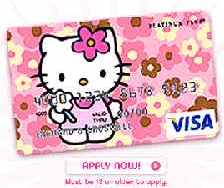
Talk to your kids about credit cards, otherwise, they’ll be fodder to credit card companies. That’s the sign of the times, when you see credit card company booths set up at campuses to snag students with offers of fun souvenirs like t-shirts and frisbees. What a lousy deal but it happens all the time! How successful are these promotions?
Seniors graduating from college acquire an average of $3,000 in credit card debt spread across at least four cards by the time they’re out of school.
Financial institutions get more and more creative with time as they build loyalty in their products. They start early by coming up with ideas that will lure preteens and young teenagers into their fold so that the “brand” familiarity takes over when the young individuals apply for successive loans. These loans accompany and grow with them through each step of their lives and progress from credit card loan to student loan, car loan and onto bigger debt such as a mortgage or home equity line of credit.
How do credit card companies market to kids? Some schemes that they’ve pulled on the vulnerable:
The Credit Card Marketing Machine
#1 Give away free stuff if someone signs up.

This seems like a pretty common marketing scheme. Companies make everyone happy by setting up shop somewhere, and offering goodies and freebies. It’s just that they do this in exchange for your financial future. A really bad trade.
#2 Offer fashionable credit cards.
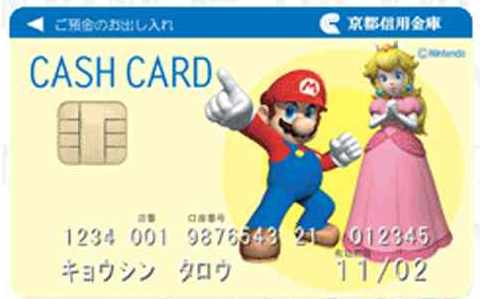
I was shocked to hear about how credit cards are seen by some as a fashion statement, thanks to SavingAdvice.com! This must go down as the strangest reason why to get or even “collect” credit cards. Some people are enticed into collecting them because they are “cute” and are cool. SavingAdvice.com also suggests why not just apply some “credit card skins” to your card if you’re after the cosmetic factor. You can “pimp your card” by doing these few steps (I’m not recommending you do anything suggested on this site).
#3 Offer even more cool, configurable or designer cards.

Here’s an extension of the “cool credit card” idea. Why not have the ability to toy around with your credit card design with this configurator? Using a cool car as the concept for the credit card design is also very tantalizing. What kid wouldn’t wish for a card like this?
#4 Bridge spending and earning between online gaming worlds and the real world.
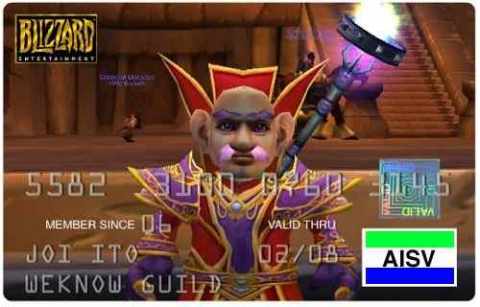
A clever way for credit card companies to get the younger demographic is to come up with products and offerings that marry the real world with the virtual one, where entertainment involves creating an alternate world of avatars, adventure and even online commerce. Though this strategy hasn’t been heavily exploited as of yet, it’s probably the wave of the future:
Very soon, credit card companies and game makers will reward their customers who spend money in the real world using private label “rewards” credit cards. They will use gifts of virtual currency such as Blizzard’s World of Warcraft gold and Second Life’s Linden dollars.
It’s not a matter of if, just when - credit card companies, Pay Pal, Amazon, eBay and the individual “gaming” companies eventually bridge the real and virtual currencies with loyalty programs and private label credit cards - there’s too much money out there to -not- to do this.
#5 Introduce the concept of using cards for spending with debit cards geared for the teen and under set. Start them early, thinks the big corporation. Pre-teens are now being cultivated as plastic card spenders starting with debit cards like Visa Buxx and the PAYjr. Mastercard. These are products that allow parents to prepay and track their children’s spending. Oh yeah, it’s also customizable. It sure sounds like companies have come up with these products under the guise of “educating” a child how to use plastic, when in fact it serves the purpose of encouraging changes in spending habits. Detractors have described the as “credit cards with training wheels” while card companies call them “life lessons”. What could be juicier than the prospect of a kid who knows how to use a card for spending? This just reminds me of the ruse of getting parents to apply for life insurance on a child with the justification that it’s so much easier or cheaper for a child to qualify for it when started early.
So what can parents do about such a marketing onslaught?
How To Fight Back Against Kiddie Credit
I would say NO.
My first thought is that we shouldn’t allow kids to have cards, period. Until they’re adults, earning their own keep and responsible for their own finances, expenses and such. In fact, I’d go further and say that credit cards shouldn’t be used at all until there’s something substantial in one’s bank account. That may not be a practical set up, but would hopefully avoid the trouble that uncontrollable debt heaps up on someone vulnerable.
Teach your kids how finance, saving and credit work before handing them a debit or credit card. I recall how I applied for my first card in my early twenties after I got my first job. Since then, I’ve never used my card(s) unless I knew I could pay the balance in full. I didn’t want to pay the card company more for items I just bought. I was too stingy to let that happen.
If you insist on giving your child an education in building and establishing credit, then make sure some questions are answered before they get a hold of a card:
Does the child have a job?
How will he pay it off?
Will he be paying the balance every month?
Does he understand about the interest he’ll be charged if he doesn’t pay it off every month?
Adhere to strict limits on the use of the card or perhaps consider starting off with a debit card, where the worst case scenario causes the corresponding bank account to get wiped out. At least, he can’t do damage beyond that.
Image Credits: Mini Cooper Custom Credit Card, Mario Credit Card
Dollar Facts That You Never Knew
FACT #1: There’s such a thing as the penny debate.
Why is the penny still around? It seems like an inconvenience to use. Well if you found out it was worth more to make a penny than its face value, wouldn’t you still hold on to it? There have been active debates on the plight of the penny online and offline from mainstream news to online community commentary, which I am republishing below. Also find additional resources here. The big question: should we scrap the penny or keep it in circulation?
Pros:
Gallup polls show that 2/3 of Americans want to keep the cent around. A pro-penny lobby even exists called Americans for Common Cents. Polls found that 58 percent of Americans stash pennies in piggy banks, jars or drawers instead of spending them like other coins. Some people eventually redeem them at banks or coin-counting machines, but 2 percent admit to throwing pennies out. Still majority recognize the penny as part of American history and tradition.
It’s a hedge against inflation, by virtue of the accurate pricing it can offer consumers.
Charities love the penny as they are a common form of donation. Without the cent, they would suffer greatly as the penny is the most frequently donated coin, and charitable organizations receive tens of millions of dollars a year in pennies alone.
Small business merchants prefer the penny for easier cash transactions. Other penny lovers are contractors who help supply pennies and consumer advocates who fear the rounding up of purchases.
It is believed that doing away with the penny will hurt the economy by causing nearly $650 dollars per year in a sort of “penny tax” that would only benefit businesses. Prices would be changed so that store owners would keep the change from the rounding required without pennies. During economic recessions, penny circulation increases dramatically as people roll and spend them. The government has also made over $500 million in profit from the penny in the last 15 years which has kept the national debt from rising as fast, so it is unlikely that the penny will go away any time soon.
Some shrewd folks on community sites have suggested that if pennies are worth more than 1 cent, you could theoretically go to the bank and take all your money out as pennies, sell them for their base metals to be melted down, and make a profit from this process. You can then repeat this process indefinitely which hints at potential arbitrage opportunities to be exploited. But if this turned out to be a popular scheme, then the government would probably close this loophole. Is this legal? Until we hear of a case that proves otherwise, then it is believed to be so.
Cons:
The penny is also called the “nuisance coin” for obvious reasons. It is extremely rare to find a vending machine that will accept pennies (though contrary to popular belief, a penny is legal tender) so it’s no surprise that most people simply keep their pennies in a jar and never use them, or just don’t keep them at all.
It’s worth more to produce than its face value due to higher metal prices, for the first time in history. The Mint’s announcement is a milestone, because coins have historically cost less to produce than the face value paid by receiving banks and have usually been moneymakers for the government. The cost of materials alone is already higher than the cent’s face value. Above and beyond that, there is also hardware and labor to produce coins which should also be considered as part of the total cost!
We pay taxes on a currency that appears unused, obsolete and undervalued.
Just like the pro-penny group, we have the anti-penny brigade.
FACT #2: Your torn up dollar bill or mutilated coin can still be worth something.
If you’ve somehow torn or destroyed a paper bill, or bent a coin (although I wouldn’t know how this could be done!), there is hope! You can redeem slightly damaged currency from your local bank, but for serious cases, you may have to do more.
Paper money that has been mutilated or partially destroyed may in some cases be redeemable at full face value. Any badly soiled, defaced, torn, or worn-out currency that is clearly more than half of the original note can be exchanged at a commercial bank, which processes the note through a Federal Reserve Bank. More seriously damaged notes — those with clearly less than half of the original surface or those requiring special examination to determine their value — must be sent to the Department of the Treasury for redemption.
You can try to claim the equivalent of your damaged money by following these steps.
FACT #3: Not all unauthorized coin production is considered counterfeiting.
Say what? It’s actually all a matter of terminology. Now don’t try this at home or you’ll still end up where the sun don’t shine.
It is universally thought that any unauthorized production of coin money is an act of counterfeiting. Technically, this is not so. Only those coins illegally produced from metal of less value than the original coins are considered to be counterfeit coins. Though still a criminal act, the unauthorized production of coins of the same metallic value is considered to be “duplication.” At any rate, those who choose to help the Fed with its printing and coinage work often end up doing perfectly legal duplication work in license-plate production at their state penitentiaries.
FACT #4: Know how and when it is illegal to destroy money.
Nothing in the law forbids anyone from destroying coins, in spite of a belief to the contrary. Defacing or mutilating a coin and then passing it as currency is another matter. The intent to commit fraud is what is being penalized in this case. As far as paper money is concerned, leaving money in your pants pockets to be drenched in a washing machine won’t harm your bills. That’s because they are made out of linen and cotton fibers, which aren’t affected by water. On this note, here’s an interesting but unverified observation from an online forum:
It’s illegal to modify money in a fraudulent way (i.e. make a defective mint Penny and sell it for a thousand dollars), but it is perfectly legal to retrieve the base metals from money, just as it is legal to possess shredded paper money (and use it for stuffing pillows, toys, etc).
FACT #5: There are many security features built into the paper bill.
Of course you already know that it’s tough to get away with counterfeiting money. There are many security features built into a paper bill today. Some such features include the use of cotton and linen rag paper to make money so it should be obvious that it is against the law to produce or handle this type of paper. Special inks, microprinting, color shifting ink, distinctive colors per denomination, watermarks and embedded polymer strips have been added to our bills to prevent their duplication and recreation. Above all this, the Treasury redesigns notes every seven to ten years.
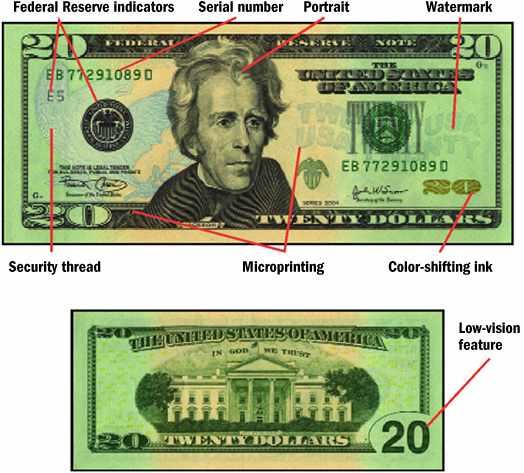
Here are some graphics that point out the security features on our money!
Dollar Facts That You Did Not Know About
FACT #1: There was a time that people made money by hand.
Duh! Like everything else in its earliest days, even money was generated manually. I wonder if people developed carpal tunnel syndrome from doing what they did.
The Federal Government started printing paper currency only in 1861. People had hoarded the coins during the Civil War, and it soon wiped out money in circulation. Congress authorized the Treasury Department to create paper currency. They were called “greenbacks” after the color ink used on one side, and Lincoln, then president, was pictured on them. It required that the money be signed by the Treasurer or anyone designated by him. When it came out in 1862, it had to be signed by hand. Six people worked in the attic of the Treasury building every day, signing, sorting and sealing them.
FACT #2: All those lines on your bill are not just lines, they’re actual phrases.
If you don’t have anything better to do, take a magnifying glass to your bill and discover that some lines in your currency’s images are really the words “THE UNITED STATES OF AMERICA,” printed repeatedly.
How many times does “The United states of America” appear on a new $100 bill? The answer is twelve (two obvious appearances plus ten times around the oval). Franklin’s portrait is framed by an oval consisting of concentric rules, cross-hatching, and white space. Similar, though slightly different, ovals surround the portraits on all US bills. Using a magnifying glass, look at the outermost line of the oval. It turns our not to be a line at all but the repeated words “THE UNITED STATES OF AMERICA.”
Fact #3: The biggest bill that exists is one for $100,000.
What are the various denominations of US currency? 12 are legal tender (but 5 are not in circulation anymore). It ranges from $1 to $100,000. The highest denomination printed in the last 45 years is a $100. Everything over $100 has been officially “retired” from circulation for 30 years. The $2 bill was revived in 1976 but flopped again, and was finally assigned as a Federal Reserve Note, remaining in circulation but continues to be rarely seen. Amusingly, it has resurfaced in the spotlight in this story. On the other end of the spectrum, the $100,000 bill was never made available to the public, and was limited to transactions between the Treasury Department and the Federal Reserve. However, it is still legal tender, if anyone can get it.
Fact #4: There’s a chance you can still spot some $1,000, $5,000 or even $10,000 bills floating around out there.
The issuance of currency in denominations of five hundred dollars, one thousand dollars, five thousand dollars, and ten thousand dollars was discontinued in 1969 because of declining use. Large denomination bills are still considered legal tender if in use, but these bills are now removed from circulation as they reach Federal Reserve Banks. Large denomination bills are no longer considered necessary since paper money has been substantially replaced by check-book money in daily business life. More recently, credit card and computer transactions have provided the basis for most large-scale monetary exchanges.
Fact #5: Do you know how the dollar sign ($) got invented?
I never really thought about it. It was one of those things that just “is”. But now you know the rest of the story right here…
Most people think the symbol for the US dollar is derived from the initials U and S superimposed on each other. Well this is false. It’s from the Spanish dollar sign. The US decided in 1782 that its basic unit of currency would be the Spanish dollar or peso. Its symbol was even then written as $, which was supposedly an ancient Phoenician sign indicating strength and sovereignty.
Credit You Lost From Your Credit Card
Have you ever stopped to think about how much money is dropping by your doorstep in the guise of home equity lines of credit, credit card applications, random loan deals, checking account offers (at least, there’s no evil catch on this one) and such? I mean, just think about all those juicy checks and easy dollars they dangle in front of us.
I just took a tally of what I’ve received in a week’s time. I’ve calculated almost $600K of credit and free miles ready for us to pluck and spend away. There were at least 15 credit card enticements in our pile, all pretty much saying the same thing and trumpeting similar deals, most with limits set at $2,000. We, of course, treat all of this as scrap, which means they immediately hit the confetti bin as torn, indistinguishable shreds. But I couldn’t help but think about all the people who have received the same tempting credit lines who think of these as life saving schemes, as hope for a tough day-to-day hand-to-mouth existence and as a way out of denial and constant restriction.
What about all those people who don’t say “No” to all this temptation? Don’t get me wrong. I have said “Yes” to my credit card (and spare), but the difference is that for the cards I did apply for, I recall having done some extensive research on them as I was particular about choosing those that gave me back the best rewards for my needs. I chased after them myself, not the other way around. I’ve never reached the limits I have on these cards because I pay them off every month.
So in your case, how would you respond to the lenders out there telling you how to spend their money on your bills, on travel or on home remodeling projects? I personally get annoyed that so much paper had to go in the production of so much junk. And frankly, here’s wishing that you do too.
Reasons Why You Should Never Live Without A Credit-Card
I only keep one credit card.
That is key. Because I don’t carry a zillion credit, debit, shopping, grocery or store type cards, I am free to love only one. My beloved Mastercard is it. I don’t share its use with anything else therefore, it remains exclusive and special.
I look at it as cash and pay it in full each month.
So I don’t whip out my card everytime something gets my attention. I use it sparingly, carefully and responsibly and when I’m short on cash. Because of that, absence makes the heart grow fonder and I don’t tire of it. Most importantly, I never finance anything and I only use my card as a replacement for cash — therefore I pay my bills in full every month. Thus, it doesn’t get me into trouble!
I am able to limit the cash I carry.
I don’t really like carrying too much money around, nor do I feel comfortable carrying a checkbook. It just makes me feel less vulnerable to carry around a card instead of cash. With less cash on my person, I’m less likely to misplace it or wonder where it went. This is good for someone like me, since I find it harder to account for the cash I use.
It’s just plain convenient to have.
It also follows that my credit card bails me out of awkward situations when I find that I’m not carrying enough cash, which is practically all the time. I don’t have to keep visiting the ATM to get bills. I don’t know what it is, but I don’t get too excited about dropping by ATMs or banks all that much.
The credit card company is my friend and ally.
My card company provides me great customer service. I pay my bills in full each month but once in a while, I screw up, forget, and end up paying past the grace period. But the credit card company is very forgiving and waives my fees each time; perhaps because I hardly do this. They also keep tight watch over possible fraudulent activity and are quite proactive on suspicious charges, which have happened on occasion.
My credit card is accurate.
It’s so freeing not to feel concerned about lost change or miscalculating payments made through cash. I’m one of those absent-minded people who can’t recall if I handed over a $10 bill or a $100 bill. In fact, my father once handed a cashier two(!) $100 bills by mistake and got change for what was supposed to be a $20. He only realized it a bit later and when he demanded for his money back, the cashier scoffed at him and refused to do an accounting. This wouldn’t happen with plastic!
My credit card reports and statements are cool.
I receive timely, detailed and helpful reports from which I can figure out and analyze my expenses. Granted I can get these from my bank but somehow, I prefer my credit card statements over my bank statements when referencing our expenses; they’re just easier to follow.
My card is essential for certain services.
I like using my card online and for dealing with vendors whom I don’t see face to face so that if I have a problem with them, I can easily dispute it. This has worked for me countless of times.
And most of all, it loves me back.
My card gives back every time I use it and my spending is justly rewarded. Now this is where many people fall into the debt trap as they think that by spending they’ll get some money back anyway. One needs to see the fallacy of this reasoning in order to genuinely appreciate credit cards, their function, use and rewards. In my case, I control my spending, and whenever I do fork out the plastic, I’m ecstatic that I get rewarded for it.
What else can I say but my single, carefully used, paid-in-full each month credit card totally rocks and I can’t bear to live without it. Of course, I still believe each card should come tagged with a warning: “Please charge responsibly.” So as far as the love goes…your mileage may vary.
How To Live Life Without A Credit Card
I pay my bills online or through automatic deduction. It’s simple, convenient, and automatic. Hey presto!
I use cash for everything else. Everything else? Pretty much. Once in awhile I’ll write a check, or use my debit card (it doesn’t have a credit card label on it, so I can’t use it online), but those occasions are rare. I withdraw cash for groceries, gas and “spending”.
What about online purchases? Exactamundo! You’ve hit the nail on the head. One of the biggest dangers of credit cards these days is that they make purchases so darn easy. Doing some research on how to pay off your debt? Hey, there’s a great book about it by Dave Ramsey. One Click(tm) and it’s headed to my door. Credit cards allow you to buy stuff, anything really, without having to think about it. And that’s dangerous.
So if I REALLY need to buy something online, I might ask a relative to order it for me, and give them cash. Obviously, this is inconvenient and you don’t want to do this too often and wear out your welcome. Which is why it works. Before I canceled my Mastercard debit card last year (about four months ago), I bought stuff online at the rate of about two things a week. Not exactly a spending spree, but it adds up to a lot over the course of a year. In the last four months, I think I’ve ordered one item. A reduction of nearly 95% of my online discretionary spending.
I could also pay using PayPal or similar methods, but I haven’t yet. The point is that it’s much harder for me to buy things online now (and to some extent, in the real world too), so I rarely ever do. While we might think that buying things online is necessary, in almost every case, it’s not. Buying online simply makes you spend more than you normally would. Take it from me, someone who is living evidence.
Using cash has other benefits. I can see at a glance (looking in my envelopes for each cash spending category) how much I have left in that budget category. That’s hard to do when you’re using a credit card. Sure, you could check your balance online, but most people never do this. Sure, you could update Quicken or Money, so you know your available balance, but this is much harder to do, especially if you’re away from home, and so many people guesstimate their balance when they’re on the road, and sometimes don’t even bother to do that. With a credit card, you can worry about it later. At a high interest rate.
Best Grocery Shopping Tips And Tricks
Always go with a list. If you go without a list, you may as well just throw your money away. Better yet, donate it to me — I probably need it more than you. :) Seriously, though, you need to prepare a list of everything you need, pulling from your weekly menu (next tip) and checking to make sure you don’t have it in your pantry, fridge or freezer. Make sure you’re not forgetting anything. Now stick to that list.
Plan out a weekly menu. This is the best way to ensure that your list is complete, and that you have enough to serve your family dinner for the week. I often plan a weekly menu and then duplicate it for the next week — this way I can shop for two weeks at once. Be sure to plan a leftovers night.
Don’t go when you’re hungry. This is a common tip, but it’s true: when you’re hungry, you want to buy all kinds of junk. You’ll end up spending a lot more. Eat a good meal first, and you’ll be more likely to stick to your list.
Have a budget. When I go to the store, I know exactly how much I can spend. Then I try my best to stick within that limit. If you don’t know how much you can spend, you’ll certainly spend too much.
Do a rough running tally. Related to the above tip, if you want to stay within your budget, it’s best to know where you’re at. Then, when you can see you’re going to go above it, you can decide whether you really need that 10-lb. box of bon bons. I keep a running tally on my grocery list, just rounding off so I can do some quick math. An item costs $1.85? I say $2. Then I don’t need a calculator or all those complicated math skills.
Keep a list on your fridge, and write things down immediately. When you run out of something, don’t leave it to your memory. Jot it down immediately, and you’ll never have to run back to the store because you don’t have eggs.
Make a pantry checklist. Make a checklist of everything you normally stock in your pantry. Keep it posted on the pantry. Put a slash next to each item for the number of items you have (if you have two cans of stewed tomatoes, put two slashes). Then, when you use something, turn the slash into an x. This makes it much easier when it comes time to make your list.
Keep things stocked for quick-n-easy meals. Easy meals for us might be spaghetti or mac-n-cheese or a quick stir-fry. We’ve always got the ingredients on hand, so we can whip something up fast when we’re feeling lazy.
Buy in bulk when it makes sense. If you can save money, over the course of a month or two, by buying in bulk, plan to do so. But be sure that you’re going to use all of it before it gets bad — it isn’t cheaper to buy in bulk if you don’t use it.
Keep your receipts, then enter into a spreadsheet. This will be your price list. Use it so you know when bulk or sale items are a good deal. It’s also a great way to comparison shop between stores — buy your baking goods in Store A but your fresh fruits in Store B. The spreadsheet can also serve as a checklist to use when you’re compiling your shopping list.
Buy frozen veggies. While fresh veggies are a little better, frozen veggies are almost as good, and much better than nothing. And since you can keep them in the freezer, they rarely go bad.
When you’re running low, write it down. Don’t wait until you run out. when you see
there’s only three toilet paper rolls left, put it on your list. Because when you run out, it will be too late. :)
Cut back on meat. Meat is expensive. We have vegetarian meals several times a week (think pasta or chili) and for other meals, you could just use a little meat as a kind of seasoning instead of the main ingredient — think Asian, Indian and other such cultural food. Actually, I eat vegetarian all the time, but the wife and kids do a little of each.
Pack your own lunch snacks. Buying pre-made snacks is convenient, but a big waste of money. Buy little baggies and buy the snacks in bulk, then it will take just a few minutes to pack some snacks for lunch each day.
Make leftovers for lunch. Plan to cook a bit extra for each dinner, so that you’ll
have leftovers for your lunch and for the kids’ lunches. Pack it right away, after dinner, so you don’t have to worry about it in the morning.
Cook a lot, then freeze. Alternatively, you can cook a whole mess of spaghetti (for example) and freeze it for multiple dinners. A great idea is to use one Sunday and cook a week’s (or even a month’s) worth of dinners. Plan 5-6 freezable dinners and cook them all at once.
Always have batteries, toilet tissue and light bulbs. And other necessities that you always seem to run out of — buy a whole bunch when they’re on sale, or buy in bulk. Be sure to check to see if you have these items before you go to the store.
Try crock pot dinners. We discovered these in the last year, and they are easy and cheap and tasty. Cut up a bunch of ingredients, throw them in the pot in the morning, and have dinner ready for you when you get home. Can anything be more perfect than that? I submit that it cannot.
Clip coupons. I know, sometimes they seem like too much trouble. But it’s not really that hard to clip a few coupons and toss them in a coupon envelop to take on your grocery shopping trip. And you can save 10-20% of your bottom line with coupons. Check store entrances, newspaper and flyers for coupons.
Only use coupons for items you were already planning to buy. Don’t let them trick you into buying something that’s not on your list, just to “save” money.
Look for specials. Every store has specials. Be sure to look for them in the newspaper, or when you get to the store (they often have unadvertised specials — look on the higher and lower shelves for deals). Don’t buy them unless they’re things you always use.
Try the store brands. Brand names are often no better than generic, and you’re paying for all the advertising they do to have a brand name. Give the store brand a try, and often you won’t notice a difference. Especially if it’s an ingredient in a dish where you can’t taste the quality of that individual ingredient.
Cut back on your “one-item” trips. They waste gas, and almost inevitably, you buy more than that one item. If you plan ahead, make a weekly menu, and shop with a list, this should drastically reduce the number of trips you make for a small number of items. But if you still find yourself running out for a few items, analyze the reason — are you not making a good list, are you forgetting some items from your list? Stock up on the things you frequently go out for.
Sugar cereals are a bad buy. Lots of money for no nutrition. Look for whole grain cereals with low sugar. Add fruit for better flavor.
Be watchful at the register. Keep an eye on the scanner — you’ll keep the cashier on his toes, and catch any mis-priced items.
When there’s a sale, stock up. Sale items can be a great deal. If it’s an item you normally use, buy a bunch of them.
Comparison shop. Look at the different brands for a certain type of product, including store brands. Sometimes there will be a significant difference. Be sure you’re comparing apples to apples — you need to divide the price by the amount (ounces, pounds, etc.) in order to get the comparable unit price.
Go during slow times. One of my favorite times to shop is late at night. But during working hours or other non-peak times is good too. Avoid right after 5 p.m., on paydays and near major holidays.
Know when the store stocks its fresh fruits and veggies. In my area, that makes a big difference. Fruits and veggies can go bad quickly, because they have to be shipped. So I know that the store re-stocks on Thursdays, and so I usually go on Thursdays or Fridays, otherwise I’ll be getting old items.
Plan one big trip a month for bulk staples. You can get fresh items at another store on other weeks, but doing a big bulk trip will cut back on the expense and amount you have to carry for the other three weeks. Avoid buying on impulse at the bulk store too — just because they sell a lot of it doesn’t mean you’re saving, if you weren’t planning on buying it in the first place.
Avoid trips to the corner store. Or the gas station! These are some of the most expensive stores. (Ranking right up there with airport stores.)
Try co-ops. You can often save a lot of money at these types of places for staples.
Consider shopping at two stores. There’s no store with a monopoly on savings. Each has savings on different items on different weeks. You might switch between two stores on alternate weeks.
Think deep freeze. If you really want to save, you’ll need a big freezer. Ask around — someone you know might have a relatively new model they don’t need anymore. You can use freezers to stock up on meat, frozen veggies, and similar staples, and to freeze big batches of pasta, casseroles, and other dinners you prepare ahead of time.
Use everything possible. Got a bunch of leftover ingredients (half an onion, a bit of tomato, some pasta, a few other veggies?) … combine them for a quick meal, so that these don’t go to waste before your next grocery trip. The more you can stretch the food, and the less you waste, the less you’ll spend in the long run.
Don’t waste leftovers. Have a list on your fridge of what leftovers are in there, so you don’t forget about them. Plan a leftover night or two, so you’re sure to eat them all. Pack them immediately for lunch, so they’re ready to take the next morning.
Don’t buy junk food (or buy as little as possible). Junk food not only costs a lot of money for about zero nutrition, but it makes you and your family fat and kills you. Talk about a bad deal! Opt for fruits and veggies instead.
Rain check. If an item is on sale but the store has run out of stock, ask for a rain check.
Go when the kids are in school. When you bring kids, they will pester you and pester you until you buy some kind of junk food. Even if you’re able to stick to your guns, it’s not pleasant saying no 10 million times. In most cases, you’ll save money shopping without the kids.
Go for whole foods. The processed kind is lacking in nutrition and will make you fat. Look for things in their least processed form — whole grain instead of white or wheat bread, fresh fruit instead of canned or juice, whole grain cereal or oatmeal instead of all other kinds of cereal. You get the idea.
Read labels. Look for trans fat, hydrogenated oils, high amounts of sugar, saturated fat, lots of sodium, cholesterol. Then avoid them like the plague. Look instead for fiber, good fats, protein, vitamins, calcium.
Clean out your fridge. You’ve got stuff growing in there and turning from solids to liquids. The leftovers have begun to organize their own political party. Toss em out and make room for the new.
Stick to your list. Avoid impulse buys. They are almost always bad, and even if it’s just a couple dollars, they will add up to $50-100 for a trip. Over the course of a year, that can mean thousands. Tell yourself you will not buy anything that’s not on your list unless it’s an absolute necessity (why isn’t toilet paper on my darn list?).
Use store savings cards. These can add up to big savings over the long run.
Cut back on your restaurant eating. It’s never cheaper or more nutritious than eating at home. Plan your dinners (see above tip) and bring your lunches to work and save a ton of money.
Avoid frozen dinners or prepared entrees. Again, these cost way more and are usually much less nutritious.
Drink water. If you regularly drink iced tea, Tang, sodas or other types of drinks, cut those out completely and just drink water. It’s much better for you, and much cheaper.
Prepare your grocery list by aisle. If you regularly shop at the same stores, organize your list so that you can easily find and check off items as you walk down the aisle. We always shop from right to left, so we’re not constantly running back and forth in the store.
Get cloth grocery bags. You’ll save tons of plastic over time, and help the environment tremendously.
Pack healthy snacks for the kids. Whole wheat crackers, popcorn, cut-up fruit, raisins, and other kid-friendly snacks are much better than the junk you often see in kids’ lunches. And cheaper.

